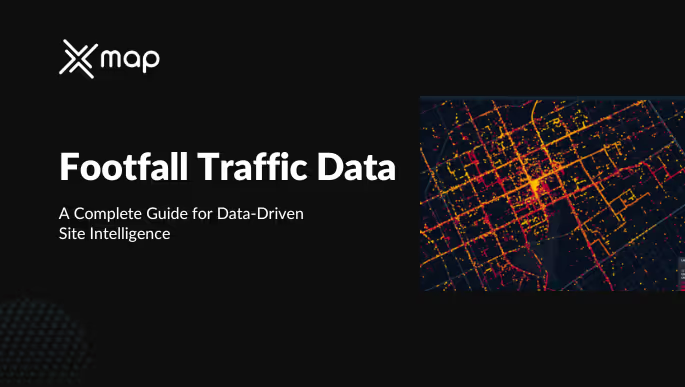
Footfall Traffic Data: A Complete Guide for Data-Driven Site Intelligence
- Remove the current class from the content27_link item as Webflows native current state will automatically be applied.
- To add interactions which automatically expand and collapse sections in the table of contents, select the content27_h-trigger element, add an element trigger, and select Mouse click (tap).
- For the 1st click, select the custom animation Content 27 table of contents [Expand], and for the 2nd click, select the custom animation Content 27 table of contents [Collapse].
- In the Trigger Settings, deselect all checkboxes other than Desktop and above. This disables the interaction on tablet and below to prevent bugs when scrolling.
1. Introduction
Footfall traffic data represents the number of individuals visiting a specific location or area, providing invaluable insights for both modern businesses and urban planners. This data is crucial for understanding consumer patterns, optimizing retail spaces, and enhancing city layouts. In today's era, where digital location analytics have grown exponentially, footfall data serves as a vital link between physical visitor behavior and strategic decision-making.
By leveraging footfall analytics, businesses can refine customer experiences and market strategies, while urban planners can improve infrastructure and public spaces. In this guide, you’ll explore a variety of use cases, discover best practices for data interpretation, learn about the leading tools in the industry, and master analytics strategies that can drive significant improvements in both business and urban contexts.
2. What is Footfall Traffic Data?
2.1. Definition
Footfall traffic data, also known as foot traffic or mobility data, is a valuable tool for understanding how people engage with physical places. Unlike basic metrics that just count numbers or money spent, footfall data gives a detailed view of how people move and behave. For instance, visit counts show how many people come to a location. Dwell time tells you how long they stay—hinting at their interest and likelihood of buying something. Visitor flow metrics help you see the routes people take, which can suggest how well the space is laid out or if there are any crowded spots. This detailed information helps businesses, city planners, and marketers learn not just about visitor numbers, but also about how people explore and use spaces, aiding smarter decisions.
2.2. Core Components of Footfall Data
When exploring footfall data, there are several core components to consider that provide a robust understanding of visitor patterns and behaviors.
- Visits, which can be measured on a daily, weekly, or monthly basis, offer a clear picture of foot traffic volume over time. Knowing your peak times can help optimize staff scheduling and marketing efforts to cater to periods of higher customer influx.
- Dwell time, another critical metric, reflects how long visitors stay in a particular location. This gives insights into engagement and visitor satisfaction.
- Understanding trade area patterns allows you to identify where your visitors originate from, helping you tailor strategies for different catchment areas.
- By integrating contextual data such as visit demographics and enhancing this with points-of-interest (POI) and other demographic datasets, you unlock a fuller understanding of your audience.
3. How Footfall Traffic Data is Collected
3.1. Digital Mobile Location Signals
At the heart of digital mobile location signals lies the sophisticated aggregation and anonymization of mobile device data. This crucial process incorporates diverse sources such as GPS, Wi-Fi pings, and application-based SDKs. Providers like SafeGraph play a pivotal role in collecting permission-based and de-identified data, ensuring both accuracy and privacy. By leveraging these technologies, businesses gain insights into mobility patterns and visit contexts, key to unlocking actionable location intelligence.
3.2. Sensor-Based Collection
Sensor-based collection techniques have revolutionized how footfall traffic data is gathered and interpreted. Each tool, from beacons to pressure mats, provides unique advantages in data accuracy and insights.
Beacons are small devices that emit Bluetooth signals, interacting with smartphones to estimate visitor's proximity and duration. They are particularly effective in capturing detailed foot traffic patterns within a defined space.
Wi-Fi Sensors leverage existing wireless networks to track nearby devices, providing insights into dwell times and repeat visits. They serve as an excellent tool for larger venues or retail environments, where Wi-Fi connectivity is common.
Thermal Counters use infrared technology to detect body heat, allowing for precise foot traffic counts without capturing personal identifying information. They are ideal for high-traffic zones where accuracy is crucial.
Video Analytics involve the use of cameras paired with analytical software to analyze foot traffic patterns. This approach not only counts visitors but can also provide demographic insights such as age and gender.
Pressure Mats are installed on the floor to register the number of steps taken over them. While relatively simple, they are effective in controlled environments like store entrances where foot traffic is funneled.
By integrating various sensor types, businesses can obtain a comprehensive understanding of their site's footfall dynamics, enhancing decision-making and operational strategies.
3.3. Manual & Hybrid Methods
Traditional methods of measuring foot traffic often relied on manual counting, where individuals physically counted visitors as they entered premises. This time-consuming practice included using clickers or tally counters to record visits. In event scenarios, surveys were commonplace, collecting data through direct interaction with attendees. Although accurate, these methods were labor-intensive and prone to human error.
3.4. Privacy and Compliance in Footfall Data
When looking into footfall traffic data, it's crucial to keep privacy intact by using anonymization and following legal rules. In today's digital world, data collection is watched closely to maintain consumer trust. Companies like xMap focus on removing personal details from data to keep privacy intact. Anonymization means taking out any information that can identify someone, so businesses can learn from the data without risking personal privacy.
Also, sticking to legal guidelines like GDPR and HIPAA ensures that data use follows regional and international laws, helping to avoid the risks of data breaches and misuse. These laws require clear communication, allowing people to know and control how their data is used. By putting strong privacy measures in place, businesses not only protect consumers but also build a reputation as responsible data handlers, boosting brand trust and consumer confidence.
4. Why Footfall Traffic Data Matters (Business Value)
4.1. Data-Driven Site Selection
Imagine having a crystal ball that forecasts the success of your next retail store, restaurant, or commercial property. While it may not be magical, footfall traffic data provides a data-driven approach to making those critical location decisions. By analyzing footfall signals, you can determine which sites promise the highest potential foot traffic, allowing your business to thrive.
Understanding the patterns of consumer movement is integral to choosing an optimal location. By leveraging these insights, you not only find bustling locales but also align with demographics that suit your offerings. Whether you're opening a chic café or a sprawling retail store, footfall data reveals invaluable trends that guide your investment.
Furthermore, these insights help in identifying sites with proximity to complementary businesses, ensuring that your establishment capitalizes on existing foot traffic streams. As a result, you not only save on marketing expenses but also maximize visibility and accessibility. In competitive markets, this approach can be the differentiator that positions your business ahead of the curve.
4.2. Competitive Intelligence
Benchmarking against competitor locations involves leveraging footfall traffic trends and patterns to gain valuable insights. By comparing the mobility data of competing businesses, such as coffee shops or retail outlets, you identify underserved markets and capitalize on emerging opportunities. This form of competitive intelligence enables businesses to stay ahead of market trends, offering a nuanced view of market dynamics through sector-wide comparisons. Understanding these patterns aids in refining your strategic approach, optimizing network planning, and crafting targeted marketing efforts.
4.3. Operational Optimization
Operational optimization is about maximizing efficiency by using footfall traffic data to align your resources with customer needs. By analyzing this data, you can make informed staffing decisions, ensuring you have the right number of staff at the right times. This prevents overstaffing during slow periods and understaffing during busy times, ultimately enhancing customer service and optimizing labor costs.
Inventory planning also benefits from footfall insights. By understanding peak traffic periods and customer flow patterns, you can optimize stock levels to meet demand without overstocking, reducing waste and increasing turnover. Implementing these insights helps maintain a balanced inventory, ensuring popular items are always available.
Peak hour analysis is another crucial component of operational optimization. By identifying when your business experiences the most foot traffic, you can plan promotions, events, or product launches to coincide with these times, maximizing customer reach and engagement. This data-driven approach leads to better resource allocation and increased profitability.
4.4. Marketing Insights
When evaluating the effectiveness of a marketing campaign, understanding the variations in footfall traffic during promotions is crucial. By analyzing the number of visitors before, during, and after a campaign, you can gauge its impact on consumer attraction and engagement. For instance, a noticeable spike in foot traffic during a promotional period can indicate a successful draw of customer interest, while consistent footfall post-promotion may suggest lasting brand impact. These insights allow businesses to refine future campaigns, ensuring alignment with consumer behavior and maximizing return on marketing investments.
4.5. Leasing and Real Estate Decisions
When it comes to lease negotiations and investment decisions, footfall traffic data serves as a vital metric in quantifying the visibility and value of properties. By understanding the flow and frequency of potential customers around a property, real estate professionals can make informed decisions about lease rates and tenant placement, offering competitive pricing that reflects true market demand.
Data on peak visitation times and demographic insights can guide investors in selecting prime locations that promise foot traffic, ensuring that their investments are set up for optimal performance. It’s this kind of data-driven strategy that enhances both the attractiveness of a property to potential tenants and its long-term value in the marketplace.
5. Core Use Cases of Footfall Traffic Data
5.1 Retail Industry
To enhance store performance, businesses should utilize footfall traffic data to gain clear insights into customer preferences and peak visit times. By analyzing this data, you can optimize staffing needs, manage inventory more efficiently, and improve customer service levels, directly impacting your bottom line.
Identifying high-value zones within retail spaces is another crucial application of footfall data. Through spatial analysis, you can pinpoint areas with the most foot traffic and strategically position products, signage, or promotional displays to capture the attention of potential buyers. This strategic placement can lead to increased sales and elevated customer engagement.
Tailored marketing strategies are also significantly enhanced through the use of footfall traffic data. By understanding where and when different customer segments are most likely to visit, you can deliver highly targeted campaigns that resonate more with your audience, thus boosting marketing effectiveness and enhancing your brand image.
5.2 Commercial Real Estate
Understanding visitor patterns is essential in commercial real estate for making informed leasing and investment decisions. By leveraging footfall traffic data, real estate professionals can assess the popularity and potential of different locations. Evaluating visitor patterns provides insights into peak times, visitor frequency, and demographic characteristics of foot traffic, which are crucial for setting competitive lease terms. For asset valuation, consistent high foot traffic often reflects higher desirability, thus potentially increasing property value. When identifying acquisition targets, analyzing historical and current visitor trends can help pinpoint emerging locations that align with strategic growth goals, ensuring smart investment choices. Ultimately, footfall traffic data translates into actionable insights that can differentiate successful real estate ventures from the rest.
5.3 Urban Planning & Public Infrastructure
Footfall traffic data can serve as a compass for guiding infrastructure investments, reflecting intricate pedestrian behavior patterns that are crucial for urban planning. By analyzing these patterns, city planners can identify which areas of a city experience the most foot traffic and require better infrastructure to accommodate the flow. This can include widening sidewalks, improving lighting, or increasing public amenities to ensure safety and accessibility. Such data-driven insights support the creation of pedestrian-friendly environments that not only enhance urban living but also promote local economic activity. Furthermore, considering foot traffic alongside vehicular data can lead to more holistic urban designs that optimize both pedestrian and traffic movement, ultimately ensuring that public investments are both strategic and effective.
5.4 Events & Tourism
Managing large-scale events successfully hinges on understanding and effectively predicting traffic flow. When you know how and when people move through a venue, it becomes far easier to enhance crowd management. Footfall traffic data can provide critical insights into visitor patterns, helping event organizers ensure smooth ingress and egress. Additionally, such data can be instrumental in optimizing the placement of amenities, signage, and staff to improve the overall attendee experience.
For tourism, leveraging footfall data can enrich the visitor experience by identifying popular attractions and peak times — facilitating crowd dispersal strategies and better resource allocation. Whether it's guiding tourists efficiently through city attractions or aiding in the planning of special events, predictive traffic flow models enhance both safety and satisfaction.
5.5 Retail Media & Advertising
In the bustling landscape of retail media and advertising, understanding where to place your advertisements can make all the difference. By leveraging footfall traffic data, you can strategically position your ads where foot traffic is highest, thereby maximizing visibility and engagement. This data-driven approach not only enhances the likelihood of consumer interaction but also allows you to measure the impact through observable changes in visits. Analyzing these variations in foot traffic post-ad placement enables you to refine strategies, ensuring greater effectiveness and return on investment. With xMap, you gain insights that transform these tactics from mere guesswork into precise actions that drive results.
6. Best Practices for Footfall Traffic Data Analytics
6.1. Choose the Right Data Sources
When evaluating the diverse sources of footfall data, it's essential to compare mobile, sensor, and hybrid methods to understand the unique benefits and limitations of each. Mobile data offers broad coverage and real-time capabilities, capturing movement patterns through smartphones. However, it relies on app permissions and may sometimes exclude non-digital visitors.
Sensor-based methods, including cameras and Wi-Fi sensing, bring precision to specific locations with high accuracy and granular insights. They can be effective in high-footfall areas but might incur higher installation and maintenance costs. Sensor data provides reliable counts of individuals within a space, unaffected by phone settings.
Hybrid models blend the strengths of both digital and sensor data, offering a balanced approach. They enable cross-verification between datasets, enhancing accuracy and coverage, but require significant integration efforts and expertise to manage diverse data streams efficiently.
Choose based on your needs: Is real-time mobility insight crucial for you? Then mobile data might be suitable. Need precision in busy locales? Sensor might be the way. Looking for comprehensive intelligence? Consider a hybrid approach to ensure a rounded, accurate view.
6.2. Align Footfall Data with Business KPIs
To truly leverage footfall data's power, it's critical to align it with your business's Key Performance Indicators (KPIs). One way to the connect dots is by analyzing footfall trends in relation to revenue fluctuations. Notice a spike in foot traffic? This could translate to increased sales, provided your in-store experience and product offerings are aligned with customer expectations.
Conversion rates, another vital KPI, can also benefit from footfall analytics. By correlating the number of visitors with purchases, you'll gain insights into how effectively your store converts walk-ins into buyers. If conversion rates are low despite high foot traffic, it might be time to reassess merchandising strategies, staff training, or promotional efforts.
Furthermore, footfall data can offer invaluable insights into customer retention. By tracking repeat visits and measuring changes over time, businesses can identify loyal customers versus one-time shoppers. Monitoring retention rates alongside foot traffic helps in crafting targeted loyalty programs and personalized marketing campaigns that resonate with customers, ultimately improving customer lifetime value.
6.3. Normalization and Bias Adjustments
When dealing with footfall traffic data, one major hurdle is ensuring consistency and accuracy across different locations. To achieve this, normalization techniques are paramount. This involves adjusting data from various sources so they can be compared on a common scale. For example, data collected from a suburban area using GPS tracking may differ significantly from data in a densely populated urban setting using Wi-Fi signals. By normalizing these variations, you can derive meaningful insights.
Additionally, bias adjustments play a critical role. Biases may arise due to technology types, panel demographics, or sampling variances. Correcting these biases requires researchers to weight the sample data to better reflect broader population behaviors. By constantly validating data through techniques like cross-referencing with manual counts and leveraging AI for pattern detection, organizations can minimize errors and enhance the data's reliability.
Another important aspect is regular calibration of data collection systems. Technologies such as sensors need periodic checks and calibrations to maintain integrity. Furthermore, analysts should be wary of making assumptions and instead dive deep into context and auxiliary data, ensuring they account for all relevant information before drawing conclusions. This diligent approach not only boosts accuracy but also enhances comparability across varied geographic or retail locations.
6.4. Integrating Footfall with Other Spatial Data
Integrating footfall data with other spatial data such as Points of Interest (POIs), demographics, and sales figures can truly unlock a treasure trove of insights. By combining these datasets, you gain a multidimensional view of a location's potential and performance.
Imagine you're a retailer planning to open a new store. Footfall data can tell you how many people pass by a particular site, but when combined with POIs, it reveals the type of nearby attractions that draw these crowds—whether they’re shopping centers, schools, or tourist landmarks. Overlaying demographic data adds another layer, helping you understand the composition of the foot traffic: Are they young professionals, families, or retirees? Lastly, tying in sales data can help you close the loop, allowing you to understand how foot traffic correlates with actual purchases.
This integration becomes especially powerful when employing tools like GeoPersona or Catchment Area analysis. These tools can help segment your audience and define the geographical areas from which your foot traffic originates. By merging these data layers, you not only capture the 'who' and 'when' of foot traffic but also the 'why' and 'how,' offering deep, actionable insights that guide strategic decisions from site selection to targeted marketing campaigns.
7. Choosing the Right Tools and Platforms
When navigating the landscape of modern platforms for footfall analytics, it's crucial to recognize the diverse functionalities they offer. Today's advanced platforms are equipped with comprehensive APIs and interactive dashboards that transform complex footfall data into actionable insights, catering to businesses across industries. The key to leveraging these platforms effectively lies in understanding the features that align with your organization's goals.
Granularity: The level of detail a platform provides can dramatically affect your decision-making process. Look for solutions that break down data by specific time intervals, locations, and demographic segments. This granular view enables organizations to fine-tune strategies and execute targeted interventions, ensuring that every decision is data-driven.
Real-Time Reporting: In the fast-paced business environment, having access to up-to-the-minute data is invaluable. Platforms offering real-time reporting allow for immediate insights into customer behavior, enabling quick pivots and adjustments to strategies. This capability is particularly beneficial for retail and event management, where foot traffic can change rapidly.
Trade Area Analysis: Understanding the geographic catchment area from which a business draws its foot traffic is critical for site selection and marketing. Platforms that provide trade area analysis utilize footfall data alongside geographical and demographic information to paint a clearer picture of customer catchments. This feature aids in identifying growth opportunities and optimizing resource allocation.
As you evaluate potential platforms, consider how well they integrate with existing systems and the ease with which their data can be interpreted and applied by your team. The right tool will not only meet your technical needs but also align with broader business objectives, making location intelligence a seamless part of your strategic toolkit.
8. Metrics, KPIs, and Reporting
- Visitor Count: At its core, this KPI answers the essential question: How many people are entering a location? Understanding visitor count is fundamental for assessing foot traffic levels, enabling you to measure performance and compare it across different periods or locations.
- Peak Hour Index: Identifying the times when footfall is at its highest can be pivotal for staffing, promotions, and other operational decisions. The peak hour index highlights these critical periods, allowing businesses to optimize resource allocation and enhance customer experience during busy times.
- Dwell Time Distributions: This metric indicates how long visitors are staying at a location. Dwell time distributions provide insights into customer engagement, helping to understand if visitors are simply passing through or spending meaningful time, which can influence layout and customer service strategies.
- Trade Area Reach: Footfall data can help determine the geographic area from which most visitors are traveling. This KPI aids in mapping out the trade area reach, crucial for targeted marketing and expansion decisions by understanding customer base and travel patterns.
Visualizing footfall data effectively brings these metrics to life, offering clarity in trends and patterns:
- Charts: Utilize bar and line charts to track changes in visitor count and peak hour indices over time, facilitating quick comparative analysis.
- Heat Maps: These provide a spatial representation of data, highlighting high and low foot traffic areas, perfect for optimizing store layouts and marketing placement.
- Timelines: Timelines can display trends data and shifts over a prolonged period, useful for seasonality analysis and forecasting future patterns.
- Cohort Comparisons: By comparing different cohorts (e.g., weekdays vs. weekends or different customer segments), you can derive insights into diverse behavior patterns and tailor strategies accordingly.
9. Future Trends in Footfall Traffic Analytics
As technology continues to advance, AI and machine learning are set to drastically transform footfall prediction. These technologies enable businesses to create precise forecasts by analyzing historical foot traffic patterns alongside real-time data feeds. This predictive capability allows organizations to anticipate customer flows and optimize resources accordingly.
In parallel, there is an increasing adoption of privacy-preserving data collection methods. Businesses are leveraging techniques such as differential privacy and federated learning to ensure that consumer data is handled responsibly and in compliance with stringent privacy standards. This approach not only protects consumer identities but also builds trust with users, encouraging more open interaction with digital platforms.
The convergence of online behavioral data with physical foot traffic analytics is another exciting trend. By integrating data from online activities, such as social media interactions and e-commerce activity, with traditional foot traffic information, businesses can gain a comprehensive view of consumer behavior. This holistic approach facilitates more informed decision-making, enabling companies to tailor marketing strategies and enhance customer experiences across both digital and physical channels.
10. Conclusion
Footfall traffic data is a game-changer in modern decision-making. It offers invaluable insights that empower businesses, urban planners, and marketers to make informed choices that drive success. By harnessing the power of footfall data, you can unlock a myriad of opportunities and align your strategies for optimal impact.
How xMap helps businesses leverage footfall traffic data for intelligent site planning and market optimization
- Strategic Location Decisions: Through insights from footfall patterns, businesses can identify prime locations by assessing consumer behavior and traffic density, ensuring they choose spots with maximum visibility and accessibility.
- Trade Area Analysis: Footfall data helps delineate the trade area of a potential site, highlighting both the reach and influence of a location, which is crucial for tailoring marketing and inventory strategies.
- Competitor and Demographic Insights: By analyzing foot traffic around competitors, businesses gain insights into competitor strengths and weaknesses, while also determining a suitable target demographic for their operations.
- Marketing Campaign Effectiveness: Leveraging this data allows businesses to track and measure the success of marketing efforts in driving foot traffic, enabling them to adjust campaigns for better reach and ROI.
- Resource Allocation and Cost Management: With clearer visibility on foot traffic patterns, businesses can manage resources and staff more efficiently, aligning hours of and operation inventory levels with peak traffic times.
- Integration with Geospatial Analytics: Combining footfall data with geospatial analytics uncovers patterns and predicts emerging trends, empowering businesses to make informed, forward-thinking decisions.

Subscribe for advanced Data analysis Tips and Reports

Get in Touch
Whatever your goal or project size, we will handle it.
We will ensure you 100% satisfication.
"We focus on delivering quality data tailored to businesses needs from all around the world. Whether you are a restaurant, a hotel, or even a gym, you can empower your operations' decisions with geo-data.”

