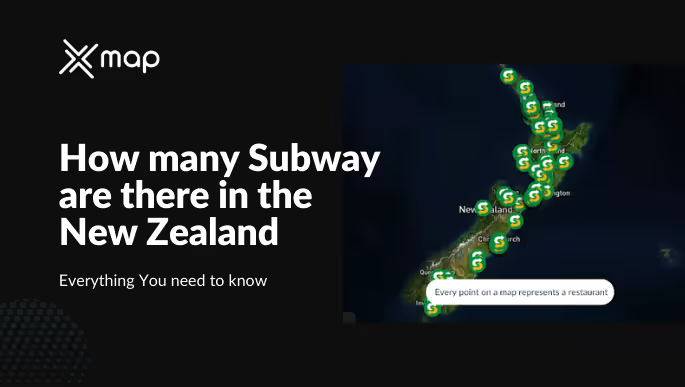
How many Subway are there in the New Zealand? - All You need to know
- Remove the current class from the content27_link item as Webflows native current state will automatically be applied.
- To add interactions which automatically expand and collapse sections in the table of contents, select the content27_h-trigger element, add an element trigger, and select Mouse click (tap).
- For the 1st click, select the custom animation Content 27 table of contents [Expand], and for the 2nd click, select the custom animation Content 27 table of contents [Collapse].
- In the Trigger Settings, deselect all checkboxes other than Desktop and above. This disables the interaction on tablet and below to prevent bugs when scrolling.
Number of Subway Locations in New Zealand
There are 156 Subway locations in New Zealand as of 2025-12-11. The region with the most locations is Auckland, with 48 sites, accounting for 30.77% of all locations.
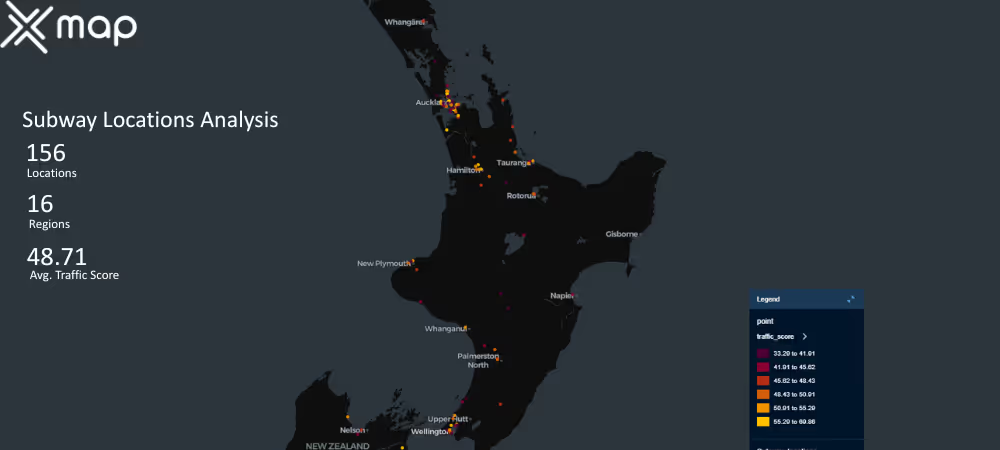
Key Stats:
Locations with Ratings: 156
Locations with Phone Numbers: 150
Locations with Websites: 156
Closed Locations: 18
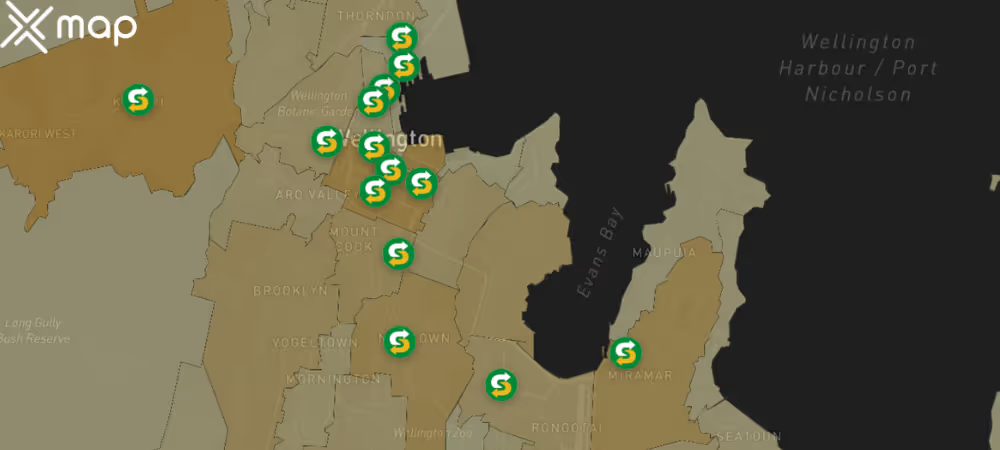
Distribution of Subway Locations Across New Zealand by Region
The largest clusters of Subway locations are found in Auckland and Wellington. Across the country, the top 10 regions account for 94.87% of all sites, highlighting a strong concentration in major population centres. Coverage is thinner in regions such as Marlborough and West Coast, where store counts remain comparatively low.
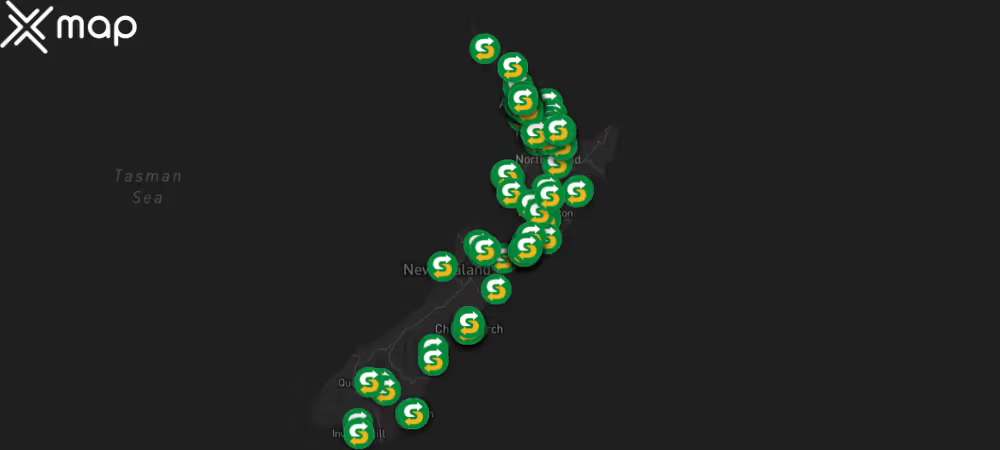
Top 10 Regions with the most number of Subway locations in New Zealand
Subway shows strong visitor engagement across New Zealand: 57 locations operate above the national mean traffic score (mean: 48.71), and 0 sites qualify as highly visited based on traffic values of 80 or higher.
Subway has a total of 156 locations across New Zealand, with Auckland leading at 48 sites, representing 30.77% of the national network. The top three regions (Auckland, Wellington, Canterbury) account for 60.26% of all locations, reflecting a strong concentration in major population centres. Regions offering the best access per capita include Wellington, Southland, Taranaki, each with relatively low population per location, while areas such as Hawke’s Bay, Northland, Marlborough are the most stretched, having the highest population per Subway site.
Subway Per Capita Insights
- Regions Auckland, Wellington, Canterbury enjoy the strongest per-capita access to Subway.
- Regions such as Tasman, Marlborough, West Coast are comparatively under-served.
Cities With the Most Subway Locations in New Zealand
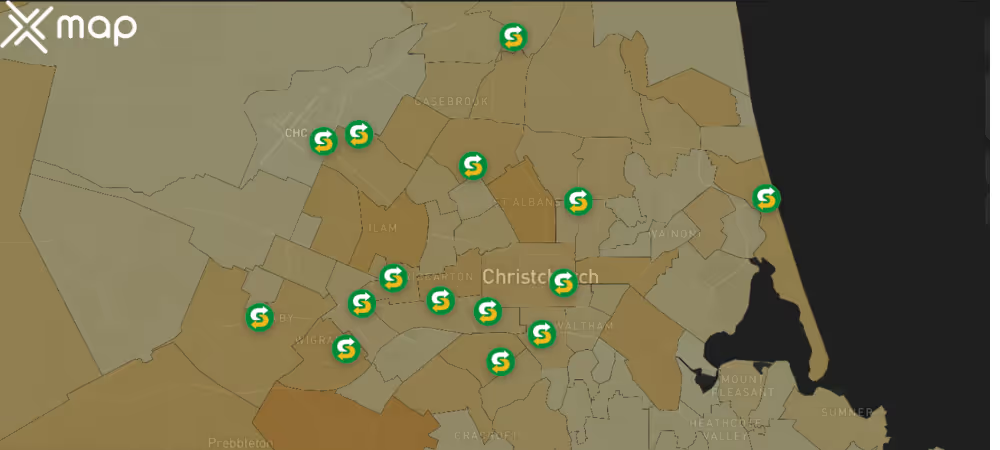
Locations are heavily concentrated in key urban centres such as Auckland, Wellington, Christchurch, and Hamilton. The top 10 cities collectively account for 72.44% of all Subway locations, highlighting a strong urban footprint and reliance on major population hubs.
Top 10 Cities Ranked by Location Count
Urban centres play a major role in Subway’s footprint. The top 10 cities account for 72.44% of all locations, highlighting a strong concentration in metropolitan or high-population corridors. Auckland leads as the most represented city, followed by Wellington and Christchurch, each with substantial store counts.
Key Variables for Subway Points of Interests
The key variables shows the most influential aspects for Subway locations nationwide. This provides a closer look of how Subway is operating from different perspectives.
Average Area Covered Per Subway Locations (By Region)
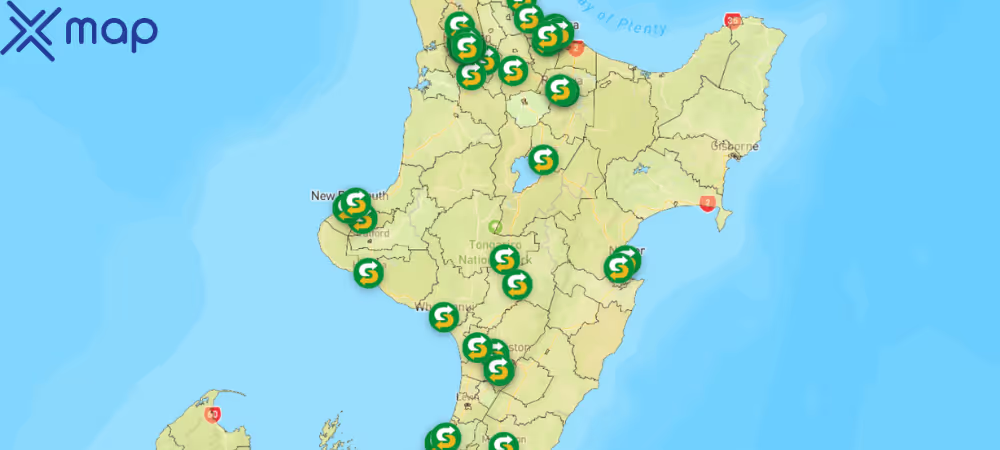
Subway locations across New Zealand span regions with significantly different land areas. Canterbury is the largest region, covering 44,504 km² with 21 Subway locations. In contrast, Nelson, the smallest region at 422 km², hosts 2 locations. Despite its smaller land area, Auckland contains the highest number of Subway stores with 48 outlets in total. Other regions such as Waikato, Bay of Plenty, and Wellington also show strong Subway presence relative to their land sizes.
Business Status of Subway Locations (Open vs Closed)
Operational status remains overwhelmingly stable, with 138 active locations and only 18 listed as closed across all regions. Most regions report 100% operational sites, reinforcing the network’s consistent presence and limited disruption from permanent closures.
Traffic Data for Subway Locations (By Region)
This view compares activity near Subway locations across regions. Using traffic scores observed around 156 sites, it highlights the busiest markets, states with a high share of above-average locations, and areas where activity is comparatively light. Use it to benchmark performance, prioritize field operations, and spot expansion or optimization opportunities.
What Subway locations are busy in the top 10 regions?
Analysis of busy locations defined as stores above the national mean traffic score of 48.71 shows that activity is not evenly distributed. The regions with the highest number of busy locations strongly mirror overall store count leaders, suggesting that larger markets also sustain higher visitor engagement. This alignment indicates efficient placement and strong brand penetration in top regions.
Customer Reviews and Ratings
This section summarizes customer sentiment toward Subway. Using ratings and review totals from 156 locations, we highlight where scores are consistently high and where feedback volume is greatest. Average star ratings reflect perceived quality, while total reviews indicate engagement and reach across the network
Average Ratings
Meanwhile, Taranaki holds the highest average rating at 4.32 stars, suggesting particularly positive sentiment in that region.
Number of Reviews
Customer feedback highlights both engagement volume and perceived quality. Auckland generates the highest number of total reviews at 9,531, indicating a large and active customer base.
Use Cases for Subway Points of Interest Data
Market Analysis
Subway POI data enables clear measurement of footprint and demand. Analysts can rank states and cities by location count, compare coverage on a per-capita basis, and use traffic scores and review volumes to spot high-performing markets and under-served pockets. The result is an objective view of saturation, growth opportunities, and performance outliers.
Site Selection
For network planning, the data supports scoring candidate trade areas using location density, population per location, and nearby traffic intensity. Teams can evaluate cannibalization risk via nearest-store distance, surface whitespace along key corridors, and prioritize sites near retail anchors, campuses, or transit where observed activity is strongest.
Urban Planning
Planners can map clusters and service gaps to understand commercial access at the neighborhood level. Per-capita coverage highlights communities with limited access, while changes in openings or closures signal shifts in activity. These insights inform corridor revitalization, streetscape and transit planning, and data-driven zoning decisions.
How this xMap’s POI data can help businesses?
Accuracy and Precision:
xMap data offers high-accuracy data, which minimizes the chances of wrong decisions based on flawed information.
Complete Data:
With xMap, businesses have access to comprehensive and complete data, effectively filling any knowledge gaps and providing a well-rounded view for decision making.
Up-to-Date Information:
xMap ensures that the data provided is regularly updated, which allows businesses to make dynamic, timely decisions in tune with current trends and situations.
Scalability:
xMap data allows businesses to scale their operations efficiently, by providing insights that cater to varying business sizes and requirements.
Analytical Power:
Utilizing xMap data’s analytics can help identify patterns and trends, thus enhancing strategic planning and foresight for businesses.

Subscribe for advanced Data analysis Tips and Reports

連絡を取る
あなたの目標やプロジェクトの規模が何であれ、私たちはそれを処理します。
100% ご満足いただけるよう努めます。
「私たちは、中東のビジネスニーズに合わせた質の高いデータを提供することに重点を置いています。レストラン、ホテル、ジムのいずれであっても、地理データを使用して業務上の意思決定を強化できます。」


