How AI Agents Need Real-World Data to Make Secure Decisions
- Remove the current class from the content27_link item as Webflows native current state will automatically be applied.
- To add interactions which automatically expand and collapse sections in the table of contents, select the content27_h-trigger element, add an element trigger, and select Mouse click (tap).
- For the 1st click, select the custom animation Content 27 table of contents [Expand], and for the 2nd click, select the custom animation Content 27 table of contents [Collapse].
- In the Trigger Settings, deselect all checkboxes other than Desktop and above. This disables the interaction on tablet and below to prevent bugs when scrolling.
AI adoption has gone viral, with virtually everyone relying on AI agents for everyday tasks. From planning meetings to automating boring processes, AI agents are gradually playing a central role in human lives. Thanks to their ability to instantly execute multi-step processes across the connected web, it's no surprise that AI agents are fast becoming the go-to digital assistants. This is the reality of AI agents. They're no longer passive thinkers waiting for step by step prompt, instead, they're decision makers who automatically assess context and choose what to do. Most times, their decisions are correct - even better than human decision makers, but sometimes there's a slip.

Photo by Tara Winstead: https://www.pexels.com/photo/robot-pointing-on-a-wall-8386440/
Why AI Agents Need Real-World Data
The old garbage in, garbage out (GIGO) principle about computers is fundamental to AI. The slightest flaw in your premise will definitely produce a flaw in your conclusion, and this is the case with AI agents. But, unlike the average computer program that would immediately highlight an error and refuse to proceed, AI tends to adapt the error into its processes - and that's where hallucinations come in. Basically, AI hallucination is when an AI generates information that sounds perfectly reasonable, but is in fact completely made up and isn't supported by real-world data. Typically, this happens when there are information gaps, biases, and probability parameters built into the AI's training data. Most users who tried using ChatGPT in its early days experienced this issue. It got so bad that despite subsequent model updates with real-time access to real-world web data, most generative AI platforms still clearly publish a disclaimer that “AI results might be inaccurate”. As such, training an AI agent on real-world data is non-negotiable, it’s the only way to avoid errors.

Photo by Mikhail Nilov: https://www.pexels.com/photo/man-in-blue-crew-neck-shirt-wearing-black-framed-eyeglasses-6963098/
The situation is worse off for AI agents which are largely designed to operate independently. The risk of hallucinating due to information gaps and also adopting probabilities gives too much room for error. Take for instance an FX trading AI agent that is designed to automate trades based on market data and geo-politics. Its reliance on data without proper vetting of the data source would lead to bad trades. But what's worse is the mechanics of making context-based decisions based on geo-politics that’s well known for biases. While bad data sources can at least be rectified, confirmation bias and political misinformation are harder to deal with. In this case, there’s a critical need to adjust the AI agent’s bias and probability parameters to either vet data via other sources or seek human assessment.
Risks Associated with AI Agents Use of Real-World Data
What makes AI agents popular is the fact that they're autonomous. Typically, their processes are fast and accurate, and it's only when dealing with grey areas that they might need human assistance for clarity. But their autonomy and accuracy is dependent on consistent access to accurate real-world data. To make smart, context-based decisions, AI agents must plug into live APIs, read internal guidelines, scrape the web, and scrutinize data. But this dependency raises two critical security risks - data poisoning and prompt injection.
By default, most AI developers build with security in mind. But, while most AI agent’s security features guard against direct attacks, indirect attacks are still successful in bypassing security. Just as most users manipulate generative AI by prompting it to act as an expert in a field or assess a “hypothetical” scenario, bad actors have their way of bypassing agentic security to execute malicious commands via direct prompt engineering. However, the often successful attacks work by embedding malicious programs into third-party data sources which the AI agent relies on. Even where an AI agent is “wary” of corrupted data sources, it’s often unable to fend off a combined attack of both data poisoning and prompt injection.
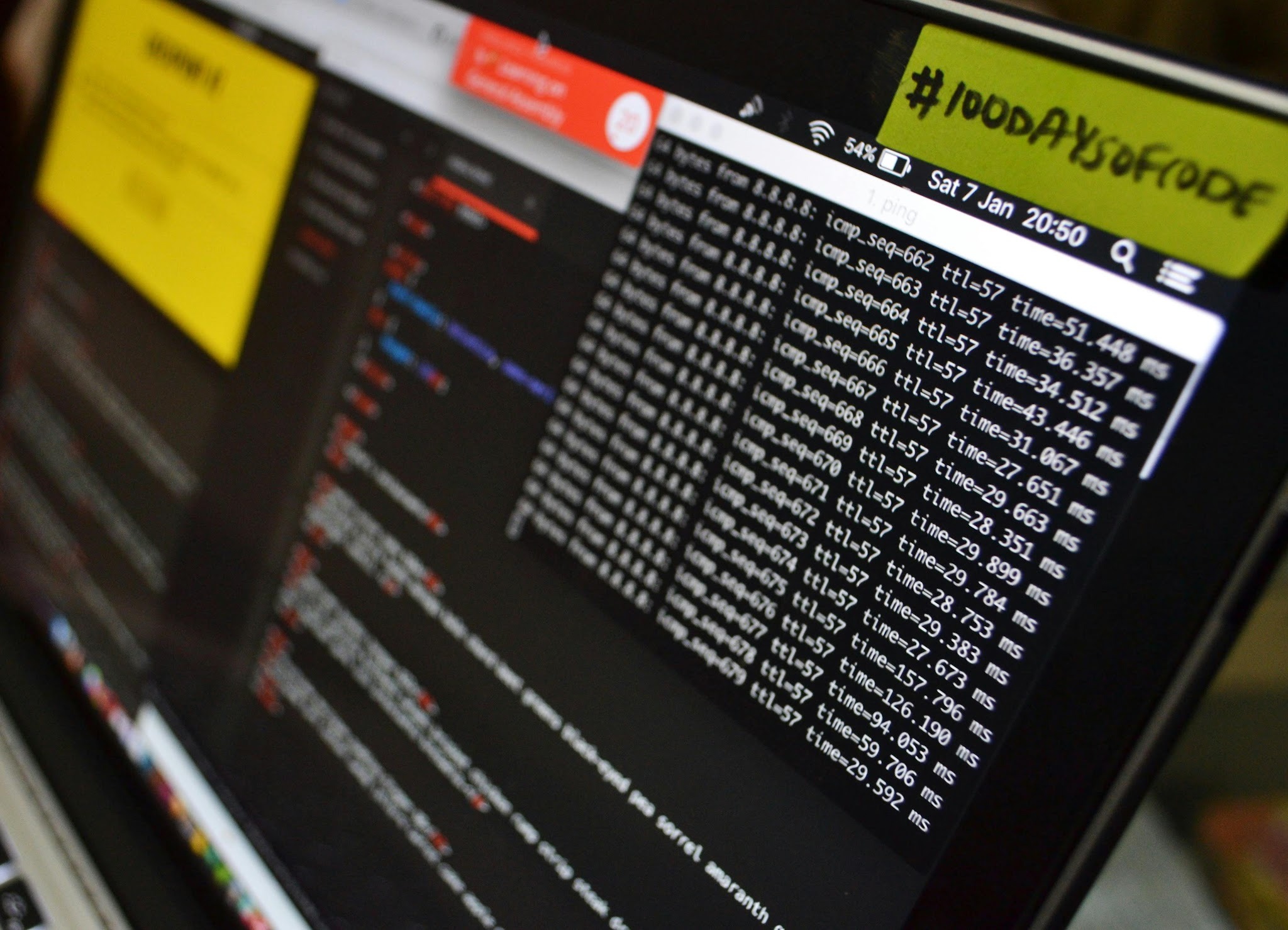
Photo by Lewis Kang'ethe Ngugi: https://www.pexels.com/photo/turned-on-flat-screen-monitor-289927/
Tips To Help AI Agents Securely Access and Adopt Real-World Data
To better secure AI agents against bad actors, two levels of security must be strengthened, and they are app-level and source-level.
- Sandboxing: This is an app-level zero-trust strategy that ensures that the AI agent runs a preliminary execution of any given command in an isolated environment first. This way, malicious commands, though executed, would not compromise the agent’s infrastructure. While the average automated sandboxing technique sometimes risks exposure, it’s better to isolate processes entirely outside the AI agent’s infrastructure. This could be done via VPN-assisted sandboxing, which completely restricts traffic within the sandbox and prevents leaks to the main infrastructure. Cybernews guide to choose between NordVPN or ExpressVPN helps pick the best VPN to assist with sandboxing.
- Data-source Audits: This source-level strategy follows the sandboxing rule. Basically, before an API or third-party app may be integrated into the AI agent’s infrastructure, it must be critically vetted for security risks. Periodic security audits must be implemented as well for pre-existing integrations.
- Multi-factor Authentication: While AI agents thrive on autonomy, you can’t be too careful with double-checking processes. This app-level security strategy ensures that sensitive processes are passed through multiple security authentication levels, extending even to human verification.
- Role-based Permissions: Extending the multi-factor authentication typically involves restricting human and agentic permissions to fit each unique process. For instance, an email responder will be limited to such a process alone, and the same applies across the board. Think of it as an app-level divide-and-rule strategy that limits the spread of a hijack only to the affected process.
Conclusion:
Getting the best out of AI requires careful fine-tuning to fit your precise needs. Typically, this involves accessing accurate real-world data and assigning sensitive permissions to the AI agent to work as expected. However, this automatically comes with the risk of exposure.
In a way, security exposure is inevitable. Just as security experts keep updating security infrastructures, bad actors are constantly getting creative with their attacks. Safety lies only in updating your security mechanisms from time to time. Since your AI agent can’t do without real-world data, it’s only fair to constantly secure it’s access to such data.

Subscribe for advanced Data analysis Tips and Reports

Get in Touch
Whatever your goal or project size, we will handle it.
We will ensure you 100% satisfication.
"We focus on delivering quality data tailored to businesses needs from all around the world. Whether you are a restaurant, a hotel, or even a gym, you can empower your operations' decisions with geo-data.”

